```markdown
Unveiling Potiphar's Wife: Zuleikha's Untold Story & Seduction's Truth
Okay, so you've probably heard the story about Potiphar's wife – maybe whispered about her being a bad woman who tried to get with Joseph. But what if there's more to it than that? Let's dig a little deeper and really look at her story, which is also told in the Quran where she has the name Zuleikha. Was she just a mean person, or was there something else going on? Maybe the culture she lived in or the power she did or didn't have played a role in all of this. We'll check out some different ways people have thought about her over time, even some religious views, and see what this super old story can teach us about temptation, who has the upper hand, and why we do the things we do. You may find her story as captivating as learning about celebrity net worth.
Decoding Zuleikha's Actions: Power, Desire, and Fate
The Familiar Narrative of Temptation and Betrayal
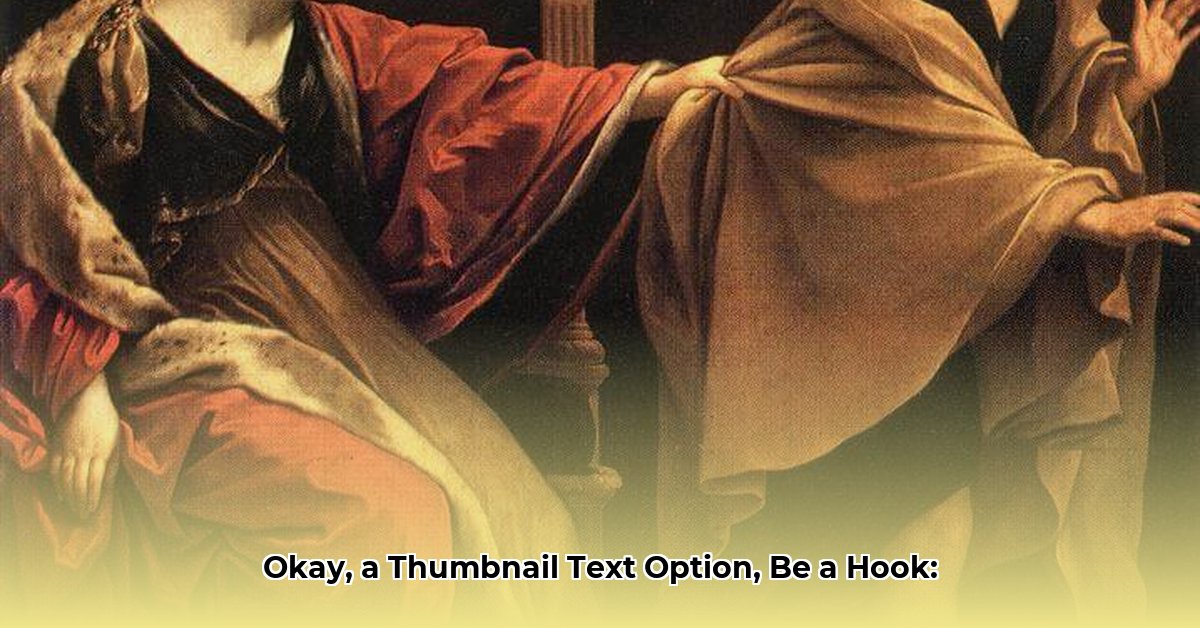
Most of us are familiar with the basic tale. It goes something like this: In the Bible's Book of Genesis and also in the Quran's Surah Yusuf, a wealthy, influential woman – Potiphar's wife, whose name some traditions call Zuleikha – becomes completely fixated on Joseph, a handsome servant in her household. He steadfastly refuses her advances, and in a fit of anger and to protect her reputation, she falsely accuses him, leading to his imprisonment. End of story, right? A clear-cut case of a wicked woman and an innocent man?
Well, not quite. While the basic plot points are generally consistent across different religious texts, the story of Potiphar's wife has been embellished and reinterpreted over centuries, leading to a much more intricate picture. So, let's dig a little deeper; could her behavior be understood beyond the surface narrative?
Beyond the Biblical Account: Zuleikha in Jewish and Islamic Traditions
Beyond the straightforward account in Genesis, later Jewish and Islamic traditions offer us multi-layered versions of Zuleikha. In Sefer haYashar, the story is dramatically heightened. She doesn't just make a simple pass at Joseph; instead, she uses every trick in the book: elaborate clothing, decadent meals, and even outright threats to get him to succumb to her desires. Some Jewish accounts even go so far as to suggest she plotted to kill her husband, Potiphar, simply to have Joseph all to herself revealing her determination and potentially, desperation.
However, when we turn to Islamic literature, especially the writings of Sufi poets like Rumi, Hafiz, and Jami, we find a much more sympathetic and nuanced portrayal. Rumi, for example, sees Zuleikha's passionate love for Joseph as a metaphor for the soul's yearning for God. Could it be that she isn't just a one-dimensional villain, but a woman driven by a deeper longing, a spiritual quest disguised as earthly desire?
Challenging the "Evil Seductress" Trope: Alternative Interpretations
The easiest, and perhaps most common, way to understand Potiphar's wife is as a purely evil seductress who shamelessly abused her power and position. But what if we challenge that assumption? What if we look at the story through a different lens, considering the societal constraints and power dynamics of the time?
Let's break it down:
- The Usual Assumption: Potiphar's wife was simply a wicked temptress, plain and simple.
- But Consider This: Jewish and Islamic traditions offer different perspectives. Feminist scholars examine the narrative through the lens of power imbalances between men and women at the time and question how much real freedom women had or whether she might have been trying to assert herself in a society where women had very little personal liberty.
- A More Realistic View: Instead of instantly labeling her "evil," we should try to understand the different aspects of her character and the underlying themes of the story, considering the social and cultural context in which she lived.
Interpretations of her actions differ greatly, some people strongly condemn her behavior as immoral and sinful, pointing to her marital vows and abuse of power. Others see her as a woman trapped by her circumstances, desperately trying to discover fulfillment and agency in a rigid, male-dominated world. Contemporary feminist scholars often look at the power dynamics between Zuleikha and Joseph, raising important questions about the very idea of female agency in the story. Was she truly in a position to make free choices, or was she constrained by societal expectations and limitations? Perhaps she wasn't just a seducer, but a woman struggling to exercise some form of control in a world that offered her very little.
Enduring Ethical Questions and Modern Relevance
The story of Potiphar's wife raises a number of thorny ethical questions that are still relevant today. Was her pursuit of Joseph justified, considering her marital status and the power she held over him? Was Joseph right to reject her, even if it meant sacrificing his own freedom and well-being? What does the story ultimately tell us about temptation, the abuse of power, and the devastating consequences of false accusations?
Consider the different angles:
| Question | Possible Answers |
|---|---|
| Was she justified in pursuing Joseph? | Probably not, considering she was married. However, maybe she was unfulfilled in her marriage and searching for something more, or trying to have some control over her own life. It also depends on cultural norms of the time. |
| Was Joseph right to reject her advances? | Yes, because it was probably the morally correct thing to do. However, perhaps he could have approached the situation differently to minimize the harm he caused. |
| What does the story teach us? | Temptation is a powerful force. Power can be easily abused. False accusations can ruin lives. Sometimes, good can come from even the most difficult situations. |
The Unintended Catalyst: Did Zuleikha Influence Joseph's Destiny?
Ultimately, the story of Potiphar's wife is a powerful reminder of the complexities of human relationships and the enduring themes of power, desire, and fate. Whether we see her as a villain or a victim, Zuleikha remains a compelling and unforgettable figure that continues to resonate across cultures and throughout history, prompting us to examine our own assumptions about morality and agency.
Interestingly, despite his imprisonment, Joseph eventually rises to a position of great power and influence in Egypt. This raises a provocative question: Did Potiphar's wife, in a strange and unintentional way, play a role in Joseph's ultimate destiny? It's a difficult idea to accept, but perhaps there's a grain of truth to it. Maybe even her actions, driven by her own desires and frustrations, were part of a larger plan that ultimately led to Joseph's triumph, highlighting the intricate web of cause and effect in human affairs.
Decoding the Accusation: Unraveling Zuleikha's Motivations
Key Takeaways:
- Zuleikha's accusation against Joseph stemmed from his rejection of her advances.
- Her motivations are complex, ranging from self-preservation to vengeance and even a desperate attempt to reclaim agency.
- Interpretations of Zuleikha vary widely across religious and cultural traditions.
- The narrative highlights themes of deception, power dynamics, and differing perspectives.
- The story exists in both the Hebrew Bible and the Quran, with differing details and characterizations.
The story of Potiphar's wife, known as Zuleikha in Islamic tradition, is far more intricate than a simple tale of seduction gone wrong. Is she merely a scorned woman seeking revenge? Or is something deeper at play, perhaps a confluence of societal pressures and personal desires that led to her fateful decision? Let's explore the layers behind her actions and why the question "why did Zuleikha accuse Joseph" continues to fascinate.
Unpacking the Rejection: Motivations Behind the Accusation
First, let's get one thing straight: Joseph rebuffed Zuleikha's advances. This is a common point across both the Hebrew Bible and the Quran. But why did Zuleikha accuse Joseph after he rejected her? Several theories emerge, each shedding light on the complexities of her character and the circumstances she faced.
- Self-Preservation: One perspective suggests that Zuleikha's accusation was an act of self-preservation. Perhaps, in a moment of panic after Joseph resisted and fled, potentially seizing part of her garment, she sought to preemptively shift the blame, protecting her reputation in a society quick to judge.
- Vengeance: Rejection stings. Could it be that Zuleikha's pride was wounded, leading her to lash out in retaliation? Perhaps she sought to punish Joseph for daring to refuse her, asserting her dominance in a world where she held considerable power.
- Reclaiming Agency: From a feminist viewpoint, Zuleikha's accusation can be seen as a desperate attempt to regain control in a patriarchal society where she had limited power. By accusing Joseph, she might have been trying to reclaim some semblance of agency, defying the constraints imposed upon her.